If you’ve ever wondered “how much does a t-shirt weigh,” you’re in the right place! Whether you’re calculating shipping costs or choosing fabric for custom designs, understanding t-shirt weight matters more than you think. Let’s break down everything you need to know with CustoJoy now!.
How Much Does a T-Shirt Weigh?
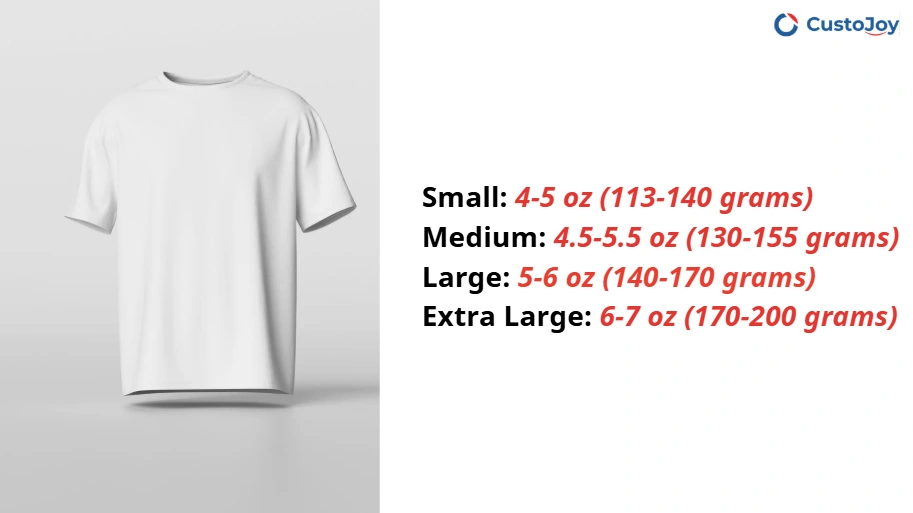
A standard medium-sized t-shirt typically weighs between 4.5 to 5.5 ounces (130-155 grams). However, weight varies based on fabric type, size, and thickness.
Weight by Size:
- Small: 4-5 oz (113-140 grams)
- Medium: 4.5-5.5 oz (130-155 grams)
- Large: 5-6 oz (140-170 grams)
- Extra Large: 6-7 oz (170-200 grams)
T-shirts fall into three main categories. Lightweight tees range from 3.5-4.5 oz (120-150 GSM). Midweight tees measure 4.5-5.3 oz (150-180 GSM). Heavyweight tees weigh 5.3-6+ oz (180-200+ GSM).
Why T-Shirt Weight Actually Matters?
Understanding t-shirt weight affects comfort, durability, printing quality, and shipping costs. The weight determines how the shirt feels, how long it lasts, and how much you’ll pay to ship it.
Lighter shirts offer better breathability and comfort in hot weather. Heavier shirts provide superior durability and a more structured appearance. For online sellers working with CustoJoy, weight directly impacts your profit margins through shipping costs.
Understanding T-shirt Fabric Weight Measurements!
GSM (Grams Per Square Meter) is the global standard for measuring fabric weight. It tells you how much one square meter of fabric weighs. Lower GSM means lighter, thinner fabric. Higher GSM indicates heavier, denser material.
GSM Categories:
- 120-150 GSM: Lightweight, breathable
- 150-180 GSM: Midweight, balanced
- 180-200+ GSM: Heavyweight, premium
Ounces Per Square Yard (oz/yd²) is primarily used in the United States. It works the same way—higher numbers mean heavier fabric. When you see “5 oz” on a label, this refers to ounces per square yard.
1. Lightweight T-Shirts (3.5-4.5 oz)
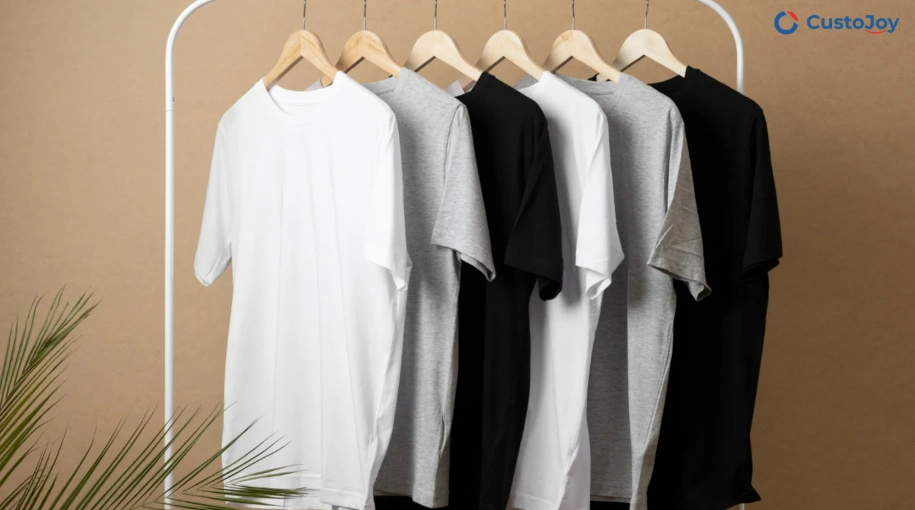
Lightweight t-shirts are perfect for hot weather and athletic activities. They’re incredibly comfortable, breathable, and quick-drying, making them ideal for summer wear and workouts.
The main advantage is extreme comfort in hot weather with excellent air circulation. They’re also cheaper to ship and perfect for packing. However, they wrinkle easily and offer less structure. They can stretch out over time if not cared for properly.
Best uses: Summer wear, gym workouts, layering pieces, travel, budget-friendly options.
2. Midweight T-Shirts (4.5-5.3 oz)
Midweight t-shirts strike the perfect balance between comfort and durability. They’re the most versatile option and work year-round for most people, which makes them popular for custom printing.
These shirts offer balanced comfort for all seasons with a more structured fit. They hold prints exceptionally well and resist wrinkling better than lightweight options. The only downside is they’re slightly less breathable in very hot weather.
Best uses: Everyday wear, custom printing, year-round staples, general purpose use.
3. Heavyweight T-Shirts (5.3-6+ oz)
Heavyweight t-shirts are premium quality pieces offering maximum durability. These investment pieces maintain their shape and structure for years with proper care.
The standout benefit is exceptional durability that lasts through countless washes. They provide warmth for cool weather and have a premium feel. The thick fabric is perfect for bold graphics and screen printing. However, they’re too warm for hot weather and cost more to ship.
Best uses: Cool weather, premium designs, streetwear fashion, professional casual settings.
3. Factors That Affect T-Shirt Weight!
1. Fabric type
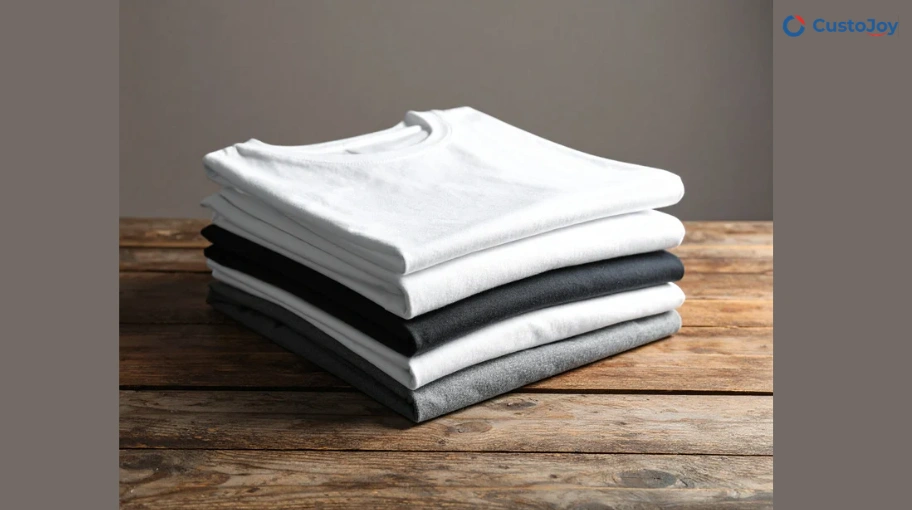
Fabric type plays a major role in determining weight. Cotton typically weighs 4-6 oz depending on thickness. Polyester is lighter at 3-4 oz. Cotton-poly blends fall between at 4-5 oz. Premium materials like Pima cotton can weigh more.
2. Size matters
Size matters significantly—a small might weigh 4 oz while an XXL weighs 7 oz or more. This is crucial when calculating shipping costs for online sales.
3. Design elements
Design elements add weight, too. Pockets add 0.5-1 oz. Heavy graphics or embroidery add 1-2 oz. Multiple print locations increase overall weight.
How to Choose the Right T-Shirt Weight?

- For custom printing businesses, midweight (4.5-5.3 oz) offers the best balance. It’s comfortable for customers, holds prints beautifully, and isn’t too expensive to ship.
- For personal wardrobes, build variety with all three weights. Lightweight for summer and workouts, midweight for everyday wear, heavyweight for cooler months and elevated looks.
PRO TIPS: Consider the specific activity. Athletic wear needs lightweight moisture-wicking fabrics (3.5-4 oz). Everyday casual works best with midweight (4.5-5.3 oz). Professional settings call for midweight to heavyweight (5-6 oz).
Printing Quality on a T-shirt Can Affect T-Shirt Weight !
Lightweight fabrics work best for digital printing and heat transfers due to their smooth surface. They’re ideal for detailed, multi-color designs.
Midweight fabrics handle all printing methods well—screen printing, DTG, and vinyl transfers. They’re thick enough to support prints without bleeding but not so heavy that detail is lost. Heavyweight fabrics excel at screen printing and embroidery. The thick base supports multiple ink layers and heavy thread work without puckering. Perfect for bold, vintage graphics.
Common Questions About T-Shirt Weight You Wanna Know!
Does a t-shirt heavier mean better quality?
Not always. Heavyweight means more durable, but lightweight can be premium too. Quality depends on fabric type and construction, not just weight.
Best t- shirt weight for summer is?…
Lightweight at 3.5-4.5 oz is ideal. Look for breathable cotton or moisture-wicking blends.
Do heavyweight shirts shrink more?
Not necessarily. Shrinkage depends on fabric composition and pre-shrinking treatment, not weight.
How much does a wet T-shirt weigh?
A wet shirt can weigh 2-3 times its dry weight. A 5 oz tee might weigh 10-15 oz when soaked.
The Bottom Line on T-Shirt Weight
Understanding t-shirt weight helps you make smarter decisions whether building your wardrobe or running a custom business. The “best” weight depends on your specific needs—comfort, durability, climate, and budget. Standard tees weigh 4.5-5.5 oz (130-155 grams). Lightweight (3.5-4.5 oz) prioritizes comfort. Midweight (4.5-5.3 oz) offers versatility. Heavyweight (5.3+ oz) provides premium durability.
Ready to create your perfect custom t-shirt? Visit CustoJoy to buy a great t-shirt in the weight that’s right for you!